What You’ll Learn in Five Days
The FSM Core Training is an intensive, clinician-led programme that takes you from foundational principles to clinical application. By the end of the course, you’ll have the knowledge and hands-on experience to begin integrating FSM into your practice immediately.
Course Content Includes:
- Foundations of Frequency Specific Microcurrent — the history, the published research, and the clinical reasoning behind frequency selection
- Condition-specific protocols — structured treatment approaches for musculoskeletal, neurological, and visceral presentations commonly seen in clinical practice
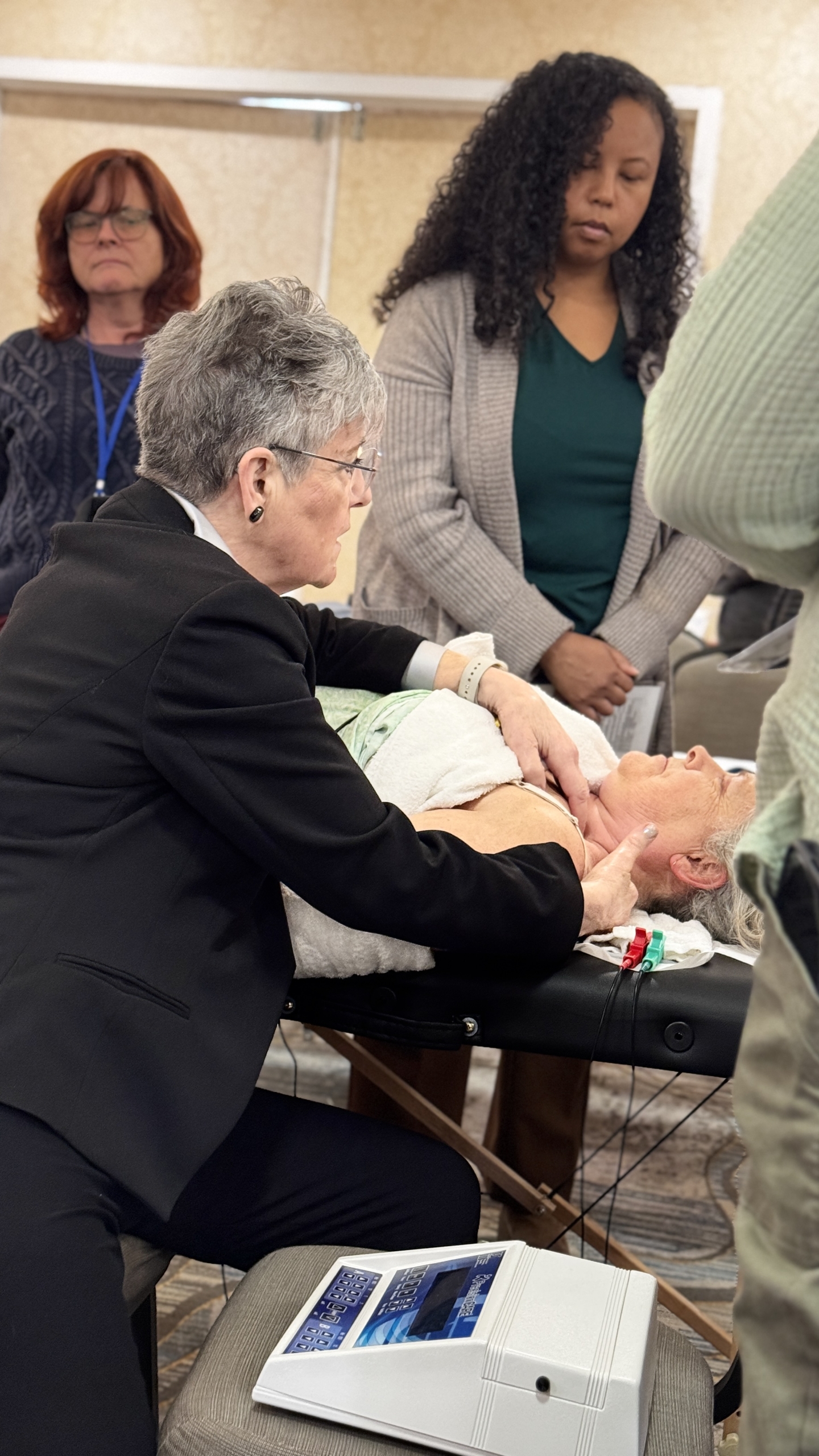
- Hands-on clinical practice — supervised application with real-time feedback from Dr McMakin and experienced FSM instructors
- Equipment training — setup, programming, and operation of two-channel microcurrent devices used in FSM practice
- Practice integration — how to incorporate FSM into your existing clinical workflow, including documentation and patient management considerations
What Makes This Training Different:
FSM is not generic microcurrent. It is a dual-channel, frequency-specific approach developed over 30 years of clinical practice and supported by published peer-reviewed research in journals including the Journal of Bodywork and Movement Therapies. The course teaches you to select specific frequency combinations based on tissue type and condition — a level of clinical precision not available in standard electrotherapy training.
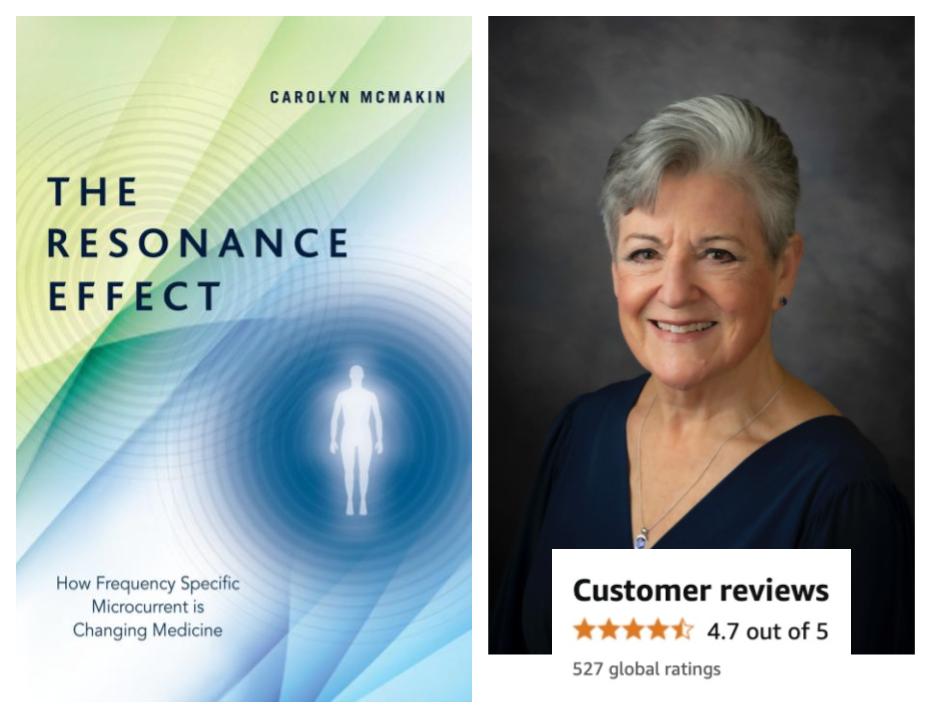
You’ll learn directly from Dr Carolyn McMakin, who developed these protocols and continues to refine them through active clinical practice four days per week. This isn’t theory taught by someone who read about it — it’s clinical knowledge transferred directly from the practitioner who built it.
What Practitioners Say:
Practitioners consistently report that the Core Training changed their approach to cases that had previously plateaued with conventional methods. Many describe it as the most clinically useful continuing education they’ve undertaken.
Your Investment Includes:
- Five full days of live instruction with Dr McMakin
- Comprehensive course manual with clinical protocols
- Access to the FSM practitioner community and ongoing support resources
- Continuing professional development hours applicable to your profession
- Eligibility to purchase FSM-specific microcurrent equipment following training
Daily Schedule
(London Standard Time) GMT
- Day 1 – Wednesday — 9:00 AM – 6:00 PM
- Day 2 – Thursday — 9:00 AM – 6:00 PM
- Day 3 – Friday — 9:00 AM – 6:00 P
- Day 4 – Saturday 9:00 AM – 6:00 PM
- Day 5 – Sunday – 9:00 AM – 6:00 PM
Sunday – The seminar will go till at least 6:00 PM on Sunday. We realize that some students will need to leave early. The afternoon of the last day is when the visceral section is covered. You will get free access to the recorded visceral section of the seminar so nothing will be missed.
Break Times (break times may vary slightly)
Doors Open 8:30 AM
Class Starts 9:00 AM
Morning Break 10:30 AM – 11:00 AM
Lunch Break 1:00 PM – 2:00 PM
Afternoon Break 3:30 PM – 4:00 PM
Class Ends 6:00-7:00 PM
*Dr. McMakin sometimes treats patients after class. Students are more than welcome to stay and watch but it is not required.
Included Meals (with Gluten-Free Options)
Morning Snack (fruit & hard-boiled eggs)
Afternoon Snack (vegetables and cheese)
Regular Coffee, Regular and Decaf Tea, Water
Breakfast and dinners are on your own.
FSM 5-DAY CORE TRAINING SYLLABUS
London · 18–22 November 2026 · Dr Carolyn McMakin
This syllabus outlines the clinical education programme covered during the five-day FSM Core Training. All content is presented for professional development within the practitioner’s own scope of practice.
DAY 1 — Foundations & Myofascial Pain
Module 1: Introduction to Frequency Specific Microcurrent (2 hours) Proposed mechanisms of action for FSM, the basic science behind resonance effects, and creating a stable state for lasting clinical effects.
Module 2: Fundamentals of FSM (2 hours) Device setup and current effects, frequency conventions, basic strategies for myofascial trigger points, published research supporting clinical use, pregnancy precautions, and frequency sequences for addressing scar tissue and adhesions.
Module 3: Device Setup & Programming (1 hour) Hands-on demonstration of the manual device. Current and frequency applied to the group with individual observation of frequency effects across six two-channel combinations.
Module 4: Myofascial Pain Protocols (2 hours) How to determine if a frequency is correct, protocol sequences for muscle and fascia presentations, contact placement, and current flow directions.
Module 5: Practicum — Prone Cervical & Shoulder (1 hour) Supervised hands-on treatment of myofascial pain in the neck and shoulder (prone position), the role of the subscapularis in shoulder pain and impingement, and adhesion protocols.
DAY 2 — Spinal Differential Diagnosis
Module 6: Disc-Generated Pain (2 hours) Protocols for acute, subacute, and chronic disc presentations. Exercise protocols for disc pain patients.
Module 7: Facet Joint Pain (2 hours) Differential diagnosis of acute and chronic facet joint–generated pain. Protocols for facet joints as perpetuating factors in myofascial pain.
Module 8: Ligamentous Laxity (2 hours) Recognition and clinical approaches to ligamentous instability, alar ligament instability, dural adhesions at C0–C1–C2, and ligamentous laxity as a perpetuating factor in myofascial pain.
Module 9: Visceral Perpetuating Factors (1.5 hours) Identifying and addressing visceral contributions to myofascial pain and trigger points.
Module 10: Extremity Joints (1.5 hours) Clinical approaches to the shoulder, knee, and TMJ. Arthritis presentations and protocol considerations for peripheral joints.
Module 11: Equipment Overview (1 hour) Introduction to available microcurrent equipment for FSM practitioners, with practical considerations for different practice settings.
Module 12: Practicum — Supine Cervical (1 hour) Supervised hands-on treatment of the neck and shoulders (supine position). Review of facet, disc, and ligament laxity contributions to cervical spine dysfunction.
DAY 3 — Injury Management & Trauma
Module 13: Subacute Injury Protocols (Weeks 1–6) (1.5 hours) Frequency protocols, precautions, and clinical considerations for subacute injuries. Differential diagnosis of shingles presenting as acute injury. Shingles protocol.
Module 14: Acute Injury & Post-Operative Protocols (2 hours) Protocols for acute trauma in the first week post-injury, athletic injury management, delayed onset muscle soreness (DOMS) prevention and published research, post-operative care protocols, acute fracture protocols, persistent fracture pain, and plantar fasciitis.
Module 15: Practicum — Supine Lumbar (1 hour) Supervised hands-on treatment of the lumbar spine (supine position). Review of visceral contributions and facet/disc mechanics in lumbar dysfunction.
DAY 4 — The Nervous System
Module 16: Introduction to Nervous System Protocols (2 hours) Basic organisation of the central nervous system, frequencies for neurological applications, concepts in concussion and traumatic brain injury, frequencies associated with CNS and ANS dysfunction, review of brain area functions, post-concussive syndrome protocols, approaches to neurodegenerative presentations, published data on post-stroke aphasia, and migraine protocols.
Module 17: Vestibular Injury (1.5 hours) Potential side effects in concussed patients with vestibular involvement, diagnosis and pathophysiology of vestibular injuries, and clinical management approaches.
Module 18: Advanced Nervous System Protocols (2 hours) Clinical approaches to cognitive dysfunction, sleep disturbance protocols, diagnosis and pathophysiology of stress-related conditions, published data on outcomes, and clinical tracking methods.
Module 19: Fibromyalgia (1.5 hours) Differential diagnosis and pathophysiology of fibromyalgia and its different aetiologies. Protocols for spine trauma–associated presentations and dural adhesion techniques.
Module 20: Neuropathic Pain (2 hours) Protocols for cervical, thoracic, and lumbar radiculopathies. Review of published research on neuropathic pain. Brachial plexus traction injuries, neural adhesions, neuropathic atrophy, post-herpetic neuralgia, compression neuropathies (carpal tunnel, thoracic outlet, Morton’s neuroma), diabetic neuropathy presentations, and optional review of CRPS mechanisms and clinical approaches.
Module 21: Clinical Setup Practice (1.5 hours) Practice configuring treatment applications for neuropathic pain presentations. Dry lab format with optional brief extremity practicum.
DAY 5 — Visceral Applications & Integration
Module 22: Visceral Protocols — Part 1 (2 hours) Visceral applications and immune system considerations. Gastrointestinal presentations (including inflammatory bowel conditions, functional bowel disorders, and constipation). Liver protocols and published data on hepatic markers. Gallbladder, gout, pancreatic, and insulin resistance considerations. Skin applications including wound healing, herpes simplex protocols, scar tissue, and skin health protocols.
Module 23: Practicum — Group Clinical Practice (1 hour) Practitioners work together in small groups, selecting presentations from within the group based on clinical findings.
Module 24: Visceral Protocols — Part 2 (3 hours) Endocrine system (adrenal, thyroid, and goitre presentations). Breast health protocols. Lymphatic system and lymphoedema. Reproductive system protocols. Respiratory system presentations (including asthma, bronchitis, chronic obstructive presentations, and sinus conditions). Cardiovascular system precautions and protocols. Protocols for emotional components associated with pain presentations.
Course Summary & Next Steps Advanced course dates, the certification process, and continuing professional development pathways.
COURSE LEARNING OUTCOMES
Upon completion, practitioners will be able to:
- Independently operate a two-channel, three-digit frequency-specific microcurrent device, including frequency selection, amperage modification, wave slope, and polarity functions.
- Independently position contacts and select appropriate protocols for cervical, thoracic, and lumbar radiculopathies and neuropathic presentations.
- Demonstrate at least two protocol selections for low back pain arising from facet joint involvement.
- Explain at least three key contraindications, precautions, or known side effects of Frequency Specific Microcurrent.
- Distinguish between pain generated by spinal facet joints, discs, and lax ligaments in a sample patient presentation.
- Independently select at least two appropriate protocols for cervical, thoracic, and lumbar radiculopathies and neuropathic presentations.
All protocols and clinical approaches are taught within the framework of professional education. Practitioners are expected to apply this training within their own scope of practice and professional regulatory requirements. FSM microcurrent devices hold 510(k) registration and are classified in the category of TENS devices for regulatory purposes. Frequency Specific Seminars does not claim that FSM diagnoses, cures, mitigates, treats, or prevents any disease or condition.
Early Bird Discount – Save $200
Register before September 18 @ $1495(≈ £1,127).
Standard Price: $1,695 (≈ £1,278)
All prices listed in USD. UK and international attendees benefit from current exchange rates.
$1,695 (≈ £1,278) – First-Time Practitioner – You have not taken an FSM Core course from Dr. McMakin. Online course students will receive a 4-hour tutorial credit with a trained FSM practicum instructor or you can attend a practicum weekend when available.*
$849 (≈ £640) – Repeat Core Attendee – You have previously attended an FSM Core seminar or taken a Core online course from Dr. McMakin.
$849 (≈ £640) Practitioner Assistant – You have an assistant working for you that you would like to have trained. You must be a current FSM practitioner who has attended or is currently enrolled in a non-discounted FSM Core course from Dr. McMakin. Unlicensed assistants can treat with FSM under your license and can increase your productivity.
$849 (≈ £640) Currently Enrolled Medical Student – You are currently enrolled in a medical/clinical training program and do not have an active clinical practice yet. To request approval for this discount please contact us.
FSM Practicum Instructor – You have taken the FSM Instructor Course. You have been approved by Dr. McMakin to assist in the practicum at this seminar. To request approval please email us.
*travel may be required
FSM Equipment – After your registration has been approved you will receive an email regarding equipment options, pricing, and a discount coupon.